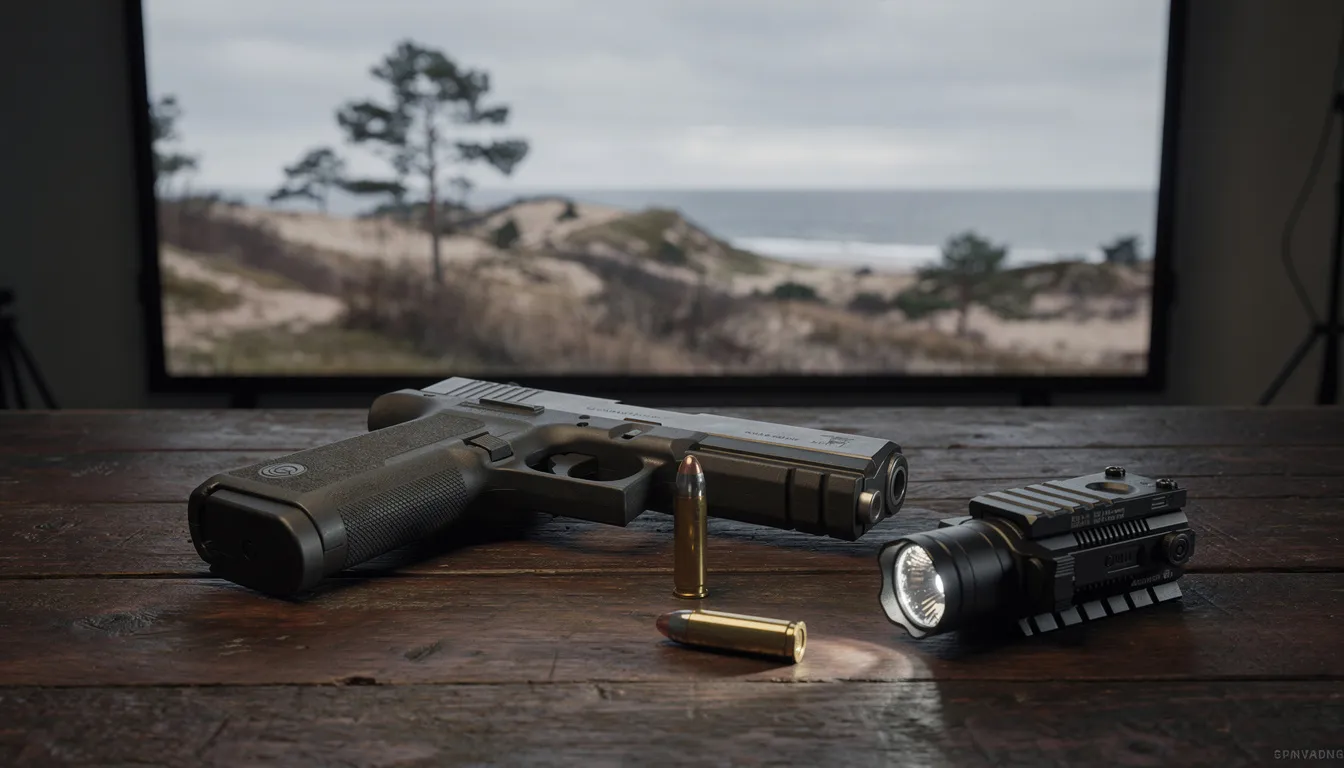
The Estonian Ministry of the Interior has prepared a comprehensive package of amendments to the Weapons Act. The reform focuses on simplifying licensing, increasing ammunition storage limits, expanding shooting range infrastructure, and strengthening police operational control. The official objective is to bolster the population's mobilization readiness and reinforce internal security.
Simpler Licensing
Currently, obtaining a gun permit requires a psychiatric examination, which can add up to a third of the total processing time—typically two to four months. Under the new system, family physicians (GP) will be authorized to conduct the check. The Ministry emphasizes:
"The goal is to speed up the process while maintaining safety standards."
Furthermore, firearm handling exams may be outsourced to private licensed organizations, similar to the driving test model. This shift is expected to reduce waiting times by 2–3 months, particularly in regions with fewer government centers.
More Ammunition and More Ranges
The bill proposes increasing the legal limits for ammunition storage. Currently, owners are permitted up to 200 rounds for self-defense weapons and up to 1,000 for sporting use. The Ministry considers these limits insufficient for regular practice.
From a practical standpoint, regular training is essential for maintaining safety and proficiency. The shortage of licensed ranges is acute in the capital and the Paldiski industrial zone, where fewer than 40 facilities exist against a projected need of at least 70.
Mobilization Potential of Citizens
For the first time, the law explicitly outlines a mechanism for the mobilization use of civilian firearms. Under certain conditions, these weapons can be promptly transferred to the state or used by owners for defensive purposes. While military experts note that such schemes increase strategic flexibility, they require strict protocols and reliable oversight.
Control and Public Safety
While the entry barrier is lowering, the police will gain broader powers:
-
Emergency Medical Reviews: Police can mandate an immediate check if an owner shows signs of unstable behavior (aggression, threats).
-
Signal Pistol Restrictions: Tighter controls on the sale of signal weapons, which are frequently converted into live firearms. In 2023, police identified 71 cases of converted pistols—a 28% increase from the previous year.
International and Historical Context
Currently, approximately 3% of the Estonian population owns firearms, while security concepts aim for 10%. Similar measures are being implemented in Finland, where licensing for reservists has been accelerated since 2022, bringing the ownership rate to 32 per 100 residents.
Critics, specifically the Estonian Psychiatric Association, argue that family doctors lack the specialized training to assess the complex risks associated with firearm ownership and fear that severe mental disorders could be overlooked.
Statistics and Trends
| Year | Registered Firearms |
| 2014 | 96,000 |
| 2024 | 126,000 |
Despite the growth, the rate of crimes involving legal firearms remains below 0.1% of all registered crimes. This suggests that increasing the number of owners does not inherently lead to a rise in public danger.
Conclusion: The reform is a strategic attempt to balance mobilization readiness and bureaucratic simplification. The success of this initiative will depend on whether the state can maintain a rigorous oversight balance as procedures accelerate.
Comments
0Add a comment