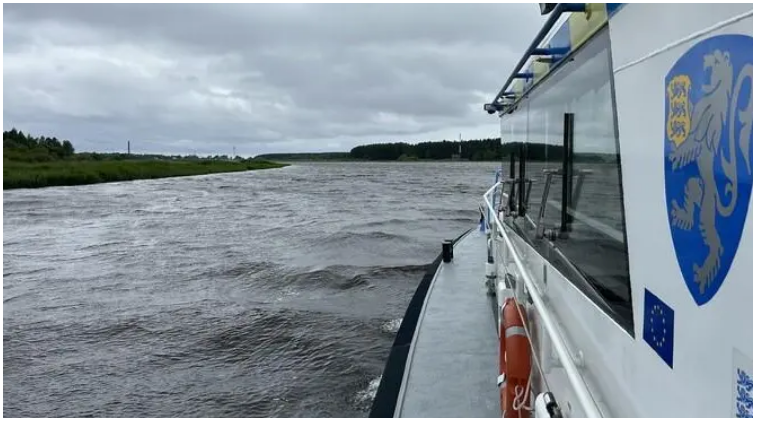
When storms intensify on the Narva River, even a minor technical malfunction can lead to serious consequences. On the afternoon of April 26, the crew of the M-32 patrol boat found themselves in a situation where every minute counted: the vessel lost steerage and began drifting toward Russian territorial waters.
The incident occurred near Narva-Jõesuu during a routine patrol. According to the Police and Border Guard Board (PPA), the cause was a technical failure exacerbated by high winds and waves. The boat stopped responding to helm commands and began veering off course.
Storm vs. Machine: Why the Boat Lost Control
Strong wind gusts made the situation critical. Even after dropping anchor, the crew was unable to hold the vessel’s position as it continued to drift. At one point, the boat crossed the maritime border into Russian waters, Narva News reports.
Given the sensitivity of this border sector, the development was particularly tense. Russian border services were promptly notified of the situation, while additional PPA units were dispatched to the scene.
Beyond the Line: 15 Minutes in Russian Territory
The three-person crew wasted no time. While the boat was outside Estonian jurisdiction, they worked to diagnose the fault and restore control amidst the storm.
Preliminary estimates suggest the vessel drifted up to 70 meters into Russian waters. Despite the high-pressure situation, the crew acted in a coordinated manner without panic.
The Recovery Operation: Returning the Vessel
Approximately 15 minutes after the incident began, the situation shifted. The crew managed to partially rectify the fault and regain control of the vessel.
The boat was turned back toward Estonian waters, where a second PPA crew joined the operation. The vessel was taken under tow and safely escorted back to port.
Protocols for Border Incidents
On the Narva River, such cases are considered sensitive but are not unprecedented. Due to weather conditions or technical failures, vessels occasionally cross the border line briefly.
In these instances, established protocols apply: both sides notify each other via border guard channels to prevent escalation. If an incident is unintentional and resolved quickly, it typically does not lead to further diplomatic friction.
Nevertheless, the Narva-Jõesuu sector remains a high-attention zone where any deviations are recorded immediately.
Incident Outcome
According to the PPA, no crew members were injured. The boat was delivered to port, and the exact nature of the technical failure is under investigation.
As of publication, there has been no official comment from Russian border authorities. In such scenarios on the Narva River, the response is generally restrained and procedural: the parties exchange information through established communication channels and document the fact of the incident without public escalation.
Comments
0Add a comment